
Work With Me
I help leadership teams see what's really going on — then create the conditions for better work.
Not through generic training.
Through diagnostics, immersive experiences and the kind of conversations most teams learn to avoid.
"Much that seems personal is not personal."
"Connection over content."
How the work usually unfolds
Diagnose
See the system more clearly. Surface what’s really happening.
Shift
Create experiences that make new thinking unavoidable.
Simulations, facilitation and shared insight that change how people relate to the work — and to each other.
Sustain
Help better patterns continue after the session ends. Small, repeatable moves that keep the change alive.
What people often say afterwards
> "The most practical workshop I've attended — offering learning tools that can be directly applied. It helped me see how I can better bridge the understanding between top management and frontliners." - Friday Night at the ER participant
> "Dustin's sense of humour is natural — which made the workshop interesting and engaging. Positive energy and motivational throughout." - - Team effectiveness workshop participant
Signature Areas of Work
Immersive Experiences
Sometimes people need more than another discussion.
They need an experience that changes how they see the system itself.
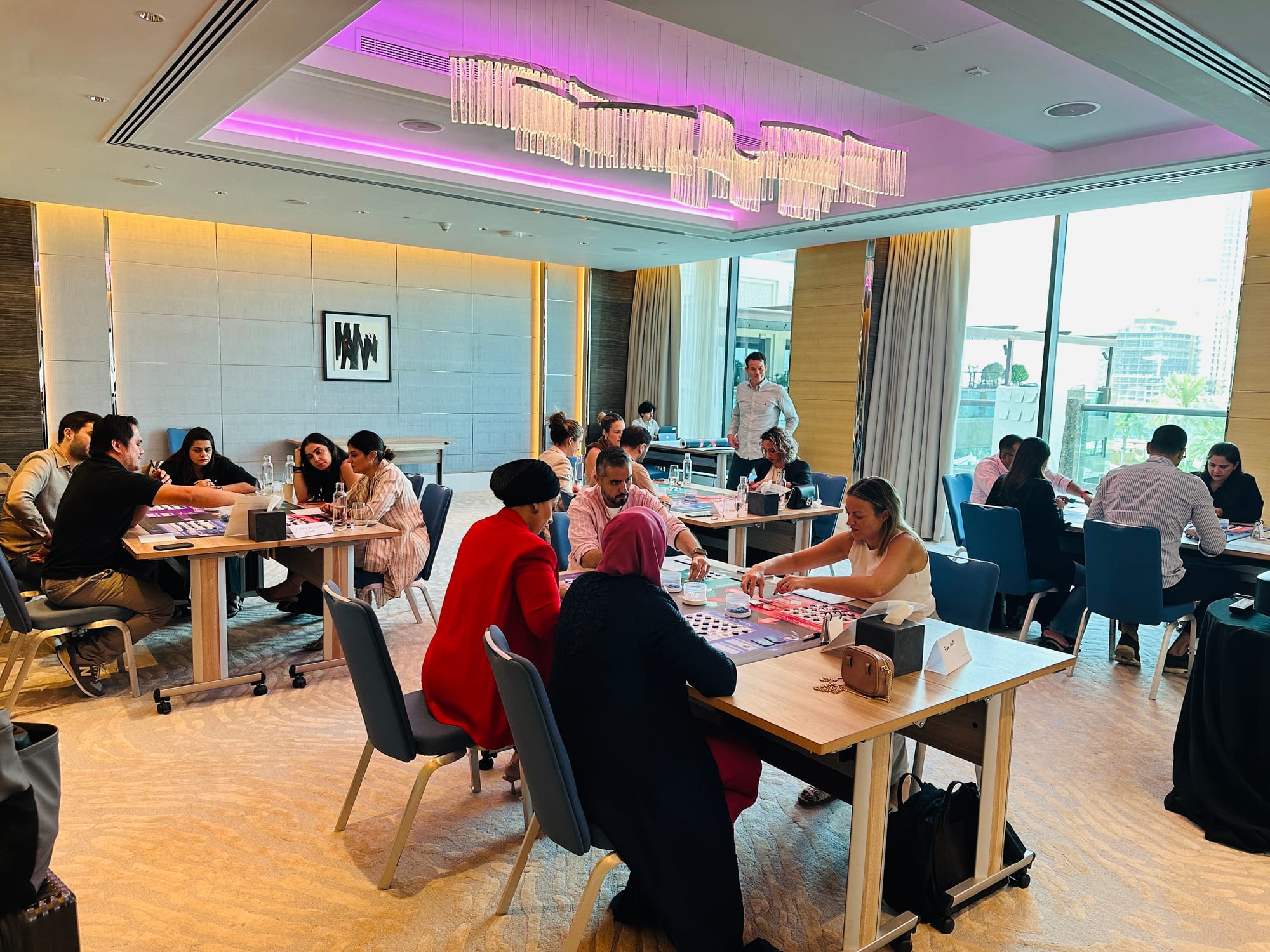
Much of my work uses immersive simulations and facilitated experiences that help teams see the hidden dynamics shaping communication, leadership, overload and collaboration in real time.
People don’t just talk about the system.
They experience it.
The Organisation Workshop
Your team sees how the organisation actually works — often for the first time.
A large-scale experiential simulation exploring:
- how well meaning leadership actions go wrong
- why good people become disconnected
- how overload distorts decision-making
- why teams stop feeling ownership
The result is a much more empathetic and productive conversation about what’s really happening — without blame or finger-pointing.
Friday Night at the ER
A fast-paced systems simulation where teams experience how decisions, priorities and collaboration break down under pressure across a wider organisation.
People quickly recognise their own organisation inside the experience and it becomes a conversation about collaboration and innovation under pressure.
Team Diagnostics
Most teams rely on assumptions about what’s wrong.
I use the Team Diagnostic Survey (TDS) to surface the conditions shaping team effectiveness — helping teams focus on what actually matters instead of chasing symptoms.
Team Diagnostic Survey (TDS)
Built on the Six Conditions framework developed by Hackman and Wageman at Harvard, the diagnostic creates a shared evidence base for more grounded conversations and transformational action.
Useful when:
- the leadership team is operating in silos
- priorities compete
- meetings feel unproductive
- something feels “off” but nobody can quite name it
Facilitation & Team Coaching
This is usually where the real work begins.
Not with frameworks.
But with the conversations teams have been avoiding.
Some sessions are strategic.
Some are messy and uncomfortable
Some unexpectedly funny.
I’ve found the sessions where people laugh the most are often the ones where the most productive work gets done.
The goal isn’t dependency on a facilitator.
It’s helping teams create the conditions where better thinking, healthier challenge and more honest conversations continue long after the session ends.
“Most leadership teams don’t need another offsite.
They need an environment where reality becomes harder to avoid.”
Want to go deeper?
The best starting point is usually a 30-minute conversation.
No preparation needed, no commitment expected. Tell me what's going on. I'll tell you honestly whether and how I can help.